
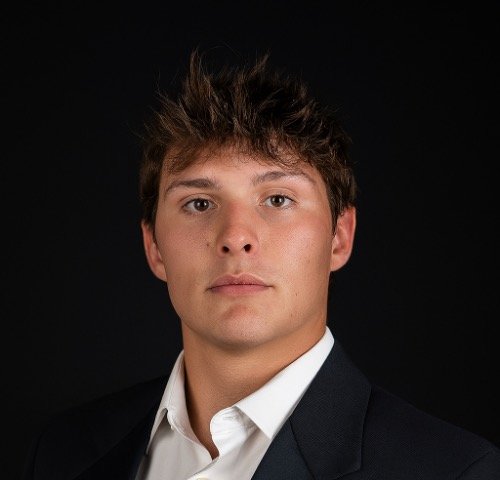
Marshall Kools
COO
Neenah, Wisconsin
While other kids collected baseball cards, Marshall collected memories of abandoned factory floors in rural northern Wisconsin.
There's a particular kind of silence in a place that once thundered with purpose. Next to the Neenah Iron Foundry, where thousands of hands once forged America's industrial backbone, a boy traced his fingers along dormant conveyor belts and studied the architecture of ambition. The massive scale fascinated him: not just the machinery, but the invisible symphony of human coordination it represented. Where others saw rust and decline, Marshall saw beauty in revelation: this is what makes America's heart beat.
Growing up as a first-generation, low-income student in rural Wisconsin teaches you truths that no MBA program ever could. You learn that opportunity doesn't come to you. You forge it from whatever raw materials you can find. While his high school classmates worked typical teenage jobs, Marshall was navigating purchase orders with Chinese manufacturers, learning quality control through trial and error, discovering that MOQs and lead times were just puzzles waiting to be solved. The declining culture around him wasn't a limitation; it was fuel. Every shuttered shop, every “For Lease” sign, every family that moved away seeking opportunity elsewhere, they all whispered the same urgent message: build something, or become another casualty of complacency.
Then came wrestling.
In rural Wisconsin, wrestling isn't just a sport. It's a philosophy course in resilience. You learn early that nobody's coming to save you. You learn to read your opponent's breathing, to understand their leverage points, to give ground strategically to set up the winning move. Most importantly, you learn that sometimes the most powerful thing you can do is help your opponent improve, because iron sharpens iron. When Stanford came calling with a wrestling scholarship, Marshall didn't see it as an escape from Wisconsin. He saw it as Wisconsin's ambassador mission to elite institutions that had forgotten what building really meant.
The culture shock at Stanford could have broken him. Here were kids who spoke casually about summer homes while Marshall had spent summers understanding why good factories failed. But wrestling had taught him to use an opponent's weight against them. While classmates chased consulting offers and talked about “disruption,” Marshall quietly built a custom clothing business that generated $60,000: real revenue from real customers for real products. He found William, another outsider who understood that the best businesses solve unglamorous problems. Together, they launched venture after venture, learning that Stanford could teach you scale, but Wisconsin had already taught you soul.
The revelation came slowly, then all at once. Sitting in another startup pitch session, listening to another app designed to solve another manufactured problem, Marshall's mind drifted back to those factory floors. The real problem wasn't sexy. It wasn't going to win TechCrunch headlines. But it was bleeding American manufacturing dry: paperwork. Bureaucracy. Front office staff drowning in compliance forms while competitors in other countries just built things. The manufacturers who had survived the offshore exodus, who had kept their communities alive, who still believed in making things that mattered, they weren't losing to better technology. They were losing to their own administrative quicksand.
That's when Arzana was born. Not in a garage in Palo Alto, but in the intersection between Marshall's worlds: where Midwest pragmatism met Silicon Valley possibility.
Arzana's mission is unglamorously essential: free manufacturers to manufacture. Every small family-run shop in Sheboygan deserves the same operational efficiency as massive city-powered operations in Chicago. By simplifying the paperwork that bogs down front office staff, Arzana doesn't just save time. It saves the ecosystem that built America. Because Marshall knows what too many have forgotten: manufacturing isn't just how America builds things. It's how America builds Americans. It's how small towns survive. It's how communities maintain dignity through productivity.
The boy who once explored the Neenah Iron Foundry is still there in Marshall, still fascinated by the beautiful complexity of thousands of people working together to create something meaningful. Only now, instead of tracing abandoned conveyor belts, he's building digital highways that ensure those belts never stop moving again. He's not choosing sides between big and small manufacturers, between coastal innovation and heartland tradition. There are no sides to choose: only the challenge of overcoming personal and economic hurdles in today's manufacturing landscape.
From foundry shadows to factory futures. From a FLI kid in rural Wisconsin to Stanford wrestler to co-founder of the company that refuses to let American manufacturing become a memory. Marshall didn't leave his roots behind. He planted them deeper, using everything that small-town struggle taught him about perseverance, everything wrestling revealed about strategic collaboration, everything those silent factories whispered about lost potential.
This isn't a story about an underdog who made it out. This is about an underdog who reached back, who remembered that America's industrial heart doesn't need sympathy or nostalgia. It needs systems. It needs someone who understands that the distance between decline and dynamism isn't measured in miles from the coast, but in the willingness to solve real problems for real people who make real things.
Small towns across America aren't waiting for rescue. They're waiting for tools. And Marshall, that kid from rural Wisconsin who saw beauty where others saw rust, is building them.
Because in the end, Arzana isn't just software for manufacturing. It's manufacturing's declaration that the American industrial story isn't over.
It's just getting retooled.